Emoji (emojis?) – those tiny icons that have become a ubiquitous part of our digital communication. But did you know that they can also be powerful tools for learning and engagement in the classroom? From sparking creativity to reinforcing concepts, here are some creative ways to incorporate emoji into your teaching toolkit:
✍ Creative Writing Prompts
Emoji can serve as fun and imaginative writing prompts to inspire students’ creativity. Provide students with a series of emojis and challenge them to create a story or poem incorporating those symbols. The possibilities are endless, and you’ll be amazed at the creative stories that emerge from a simple set of emoji.
Here’s an example of an emoji writing prompt slide:
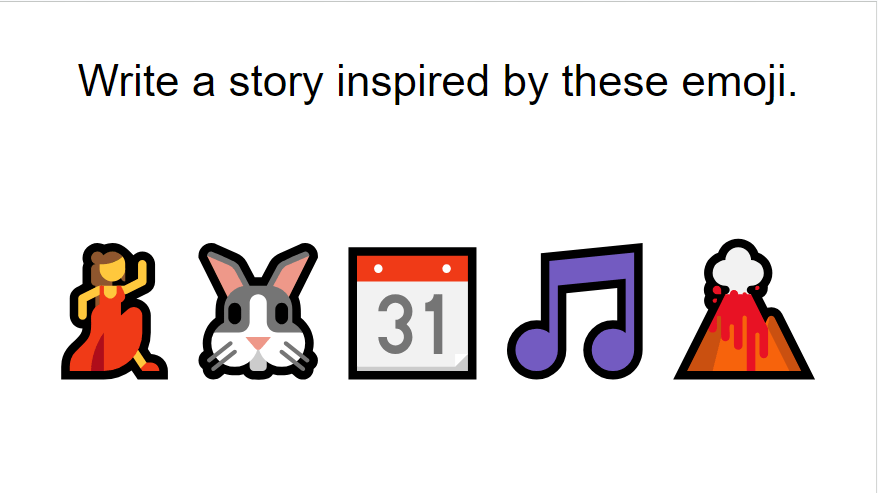
Can you imagine all the things students might come up with using these images for inspiration? I’m envisioning some kind of rabbit dance party, or a story involving a magician and his rabbit, or you know you have that one kid who will write a story about sacrificing someone in the volcano.
🎯 Review Games
Spice up your review sessions with emoji-themed games. You could do this a few ways:
- Have students create an emoji story that summarizes or describes a concept, story, person, or historical event.
- Provide the emoji to students and have them figure out what the emoji represents in the content you’ve been studying.
- Use emoji as mnemonic devices to help students remember vocabulary words or difficult concepts.
Let’s say you’ve been reading Romeo and Juliet with your class. You could divide the class into groups and assign each group one act of the play. Each group will have to use emoji to create a summary of the main action in that act (or in each scene within the act).
So, for Act 1 Scene 1 of Romeo and Juliet, I might have
👨💬🗨👱♂️🤺🔥⚔🤴🛑
🧠 Brain Breaks
Emoji-themed brain breaks can inject a dose of fun and energy into your classroom.
Try activities like
- Emoji Pictionary: students draw or act out emojis for their peers to guess
- Emoji Yoga: students mimic the expressions of different emojis
- Emoji Stories: give students a set of emoji that represent a movie or story they’re familiar with and see who can guess what it is
Here’s an example of an emoji story for the story of Sleeping Beauty:
🧙♀️⚡🧚♀️🧚♂️👸💤🤴😘
🍳 Emoji Kitchen!
This one is truly my favorite. Honestly, one day my coworkers and I got distracted by it for at least 30 minutes.
Emoji Kitchen is a free website that allows you to “cook up” new emoji by combining two existing emoji.
Here’s an example:
🍞+🥑=

An avocado toast emoji. It’s so beautifully silly.
But imagine the creative possibilities in your classroom!
- Create an emoji to represent a character from your current class novel.
- Create an emoji that shows how a character is feeling right now in the book.
- Create an emoji to represent the theme of the book.
- Create a series of emoji to describe the events of the last chapter of the book.
I could go on, but I wont.
🔚 So what do you think?
Incorporating emoji into your classroom activities can enhance student engagement, foster creativity, and make learning more fun and relatable. So go ahead, embrace the power of emoji and watch your students’ enthusiasm and creativity soar!
 KatieMacTeach